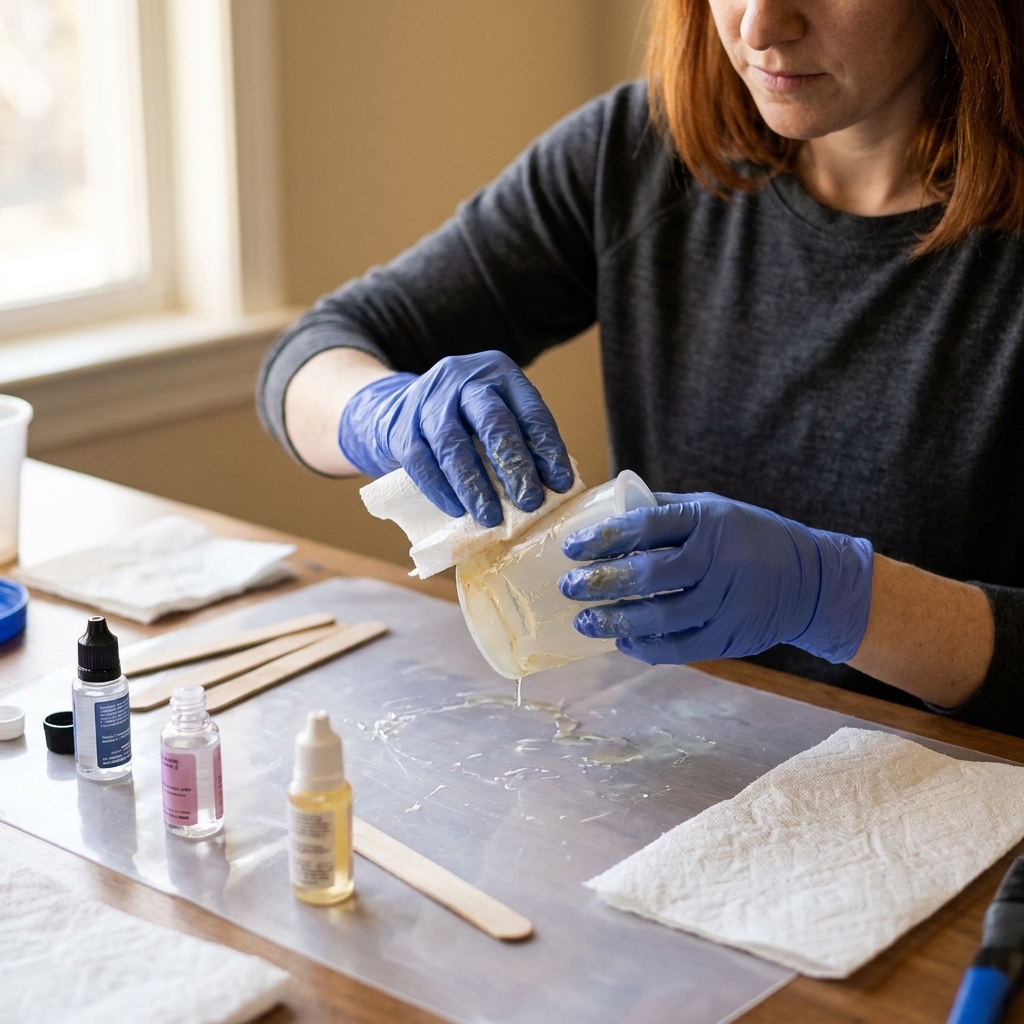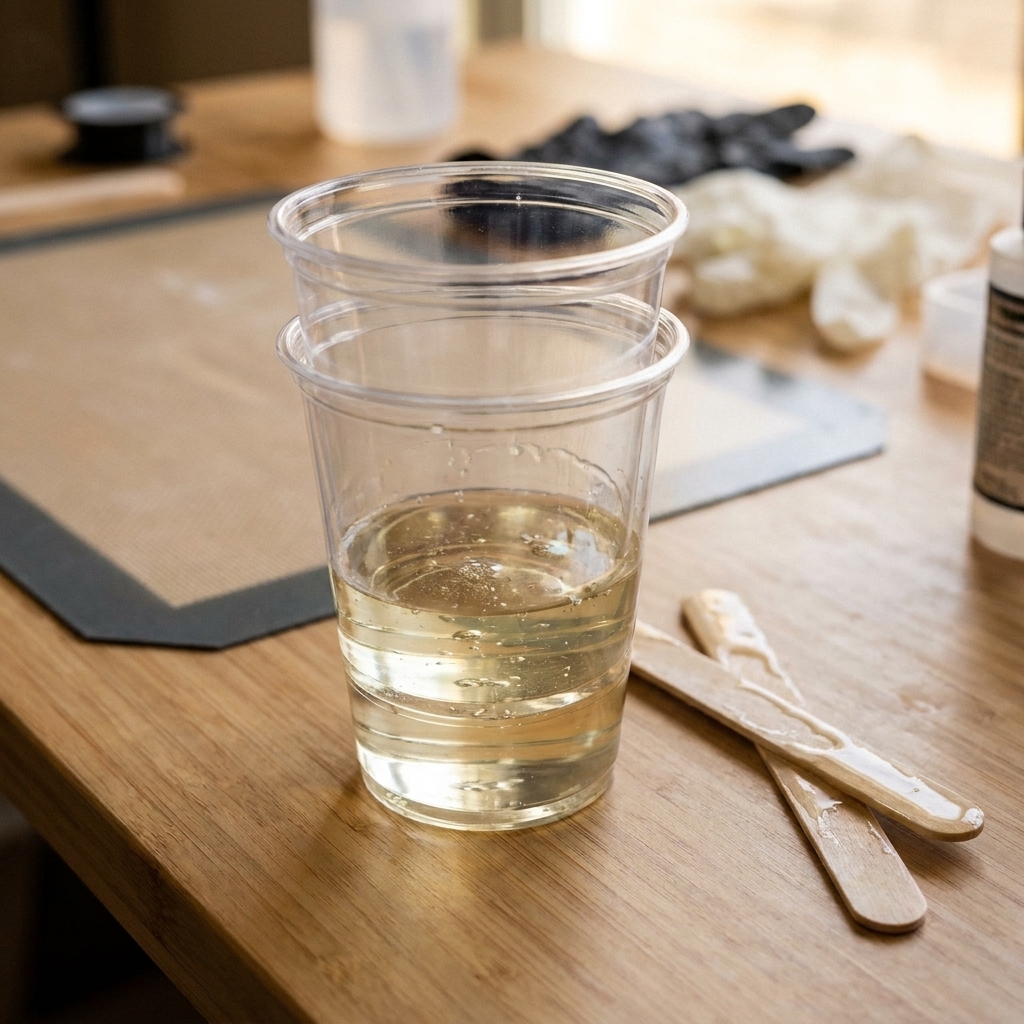
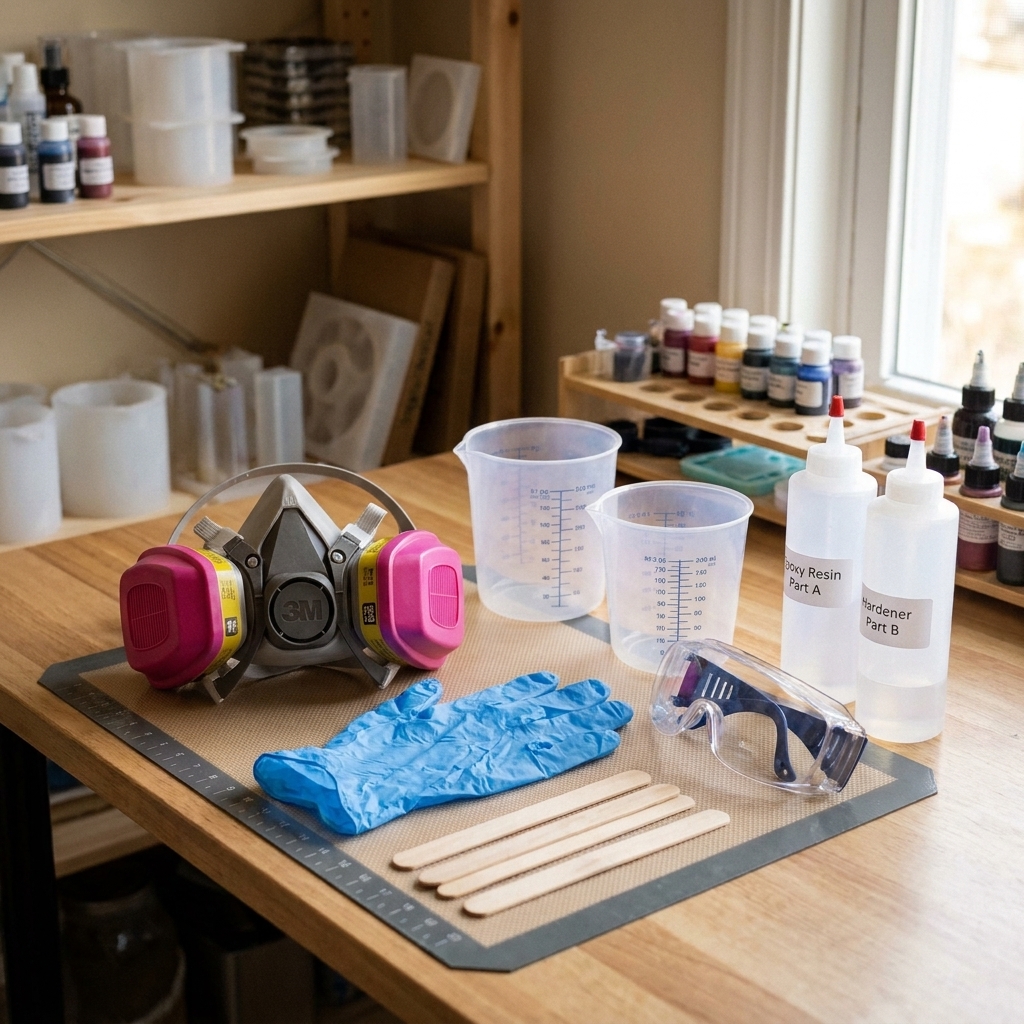
A practical resin PPE guide covering properly fitted respirators (OV and P100 options), nitrile glove picks and thickness, and sealed goggles for splashes an...
Epoxy Resin on Skin: Removal and Prevention

Ruby Fletcher
Ruby Fletcher is a dedicated resin crafter with years of hands-on experience pouring, molding, and creating custom epoxy art. After turning her dining room into a makeshift studio, she developed a passion for helping beginners navigate the sticky, colorful world of resin with confidence. She loves sharing practical tutorials, troubleshooting tips, and essential safety guides to make epoxy crafting accessible for everyone.
Published · Last updated
The first time I got epoxy resin on my hands, I did what a lot of beginners do. I panicked, grabbed the closest thing that “felt” like it would dissolve it, and scrubbed way too hard. My skin was red for the rest of the day, and I learned a lesson I wish someone had drilled into me sooner: your goal is to get resin off without spreading it, driving it into tiny skin cracks, or wrecking your skin barrier.
This guide walks you through what to do right away, what to avoid, and how to prevent skin exposure in the first place.
First, identify what touched your skin
Not all resin contact is the same, and the safest cleanup depends on what you are dealing with.
- Unmixed Part A (resin) or Part B (hardener): These can be especially irritating (often the hardener, but it depends on the product). Treat as a priority cleanup.
- Mixed but uncured resin: Still reactive and can cause irritation or sensitization.
- Cured resin: Usually more of a physical issue (stuck bits) than a chemical one, but you still want it off gently.
- UV resin: Similar approach. It is uncured until it is properly exposed to UV, so treat it like uncured resin.
If you are not sure, assume it is uncured and clean up promptly.
What to do now (uncured resin on skin)
Step 1: Do not spread it
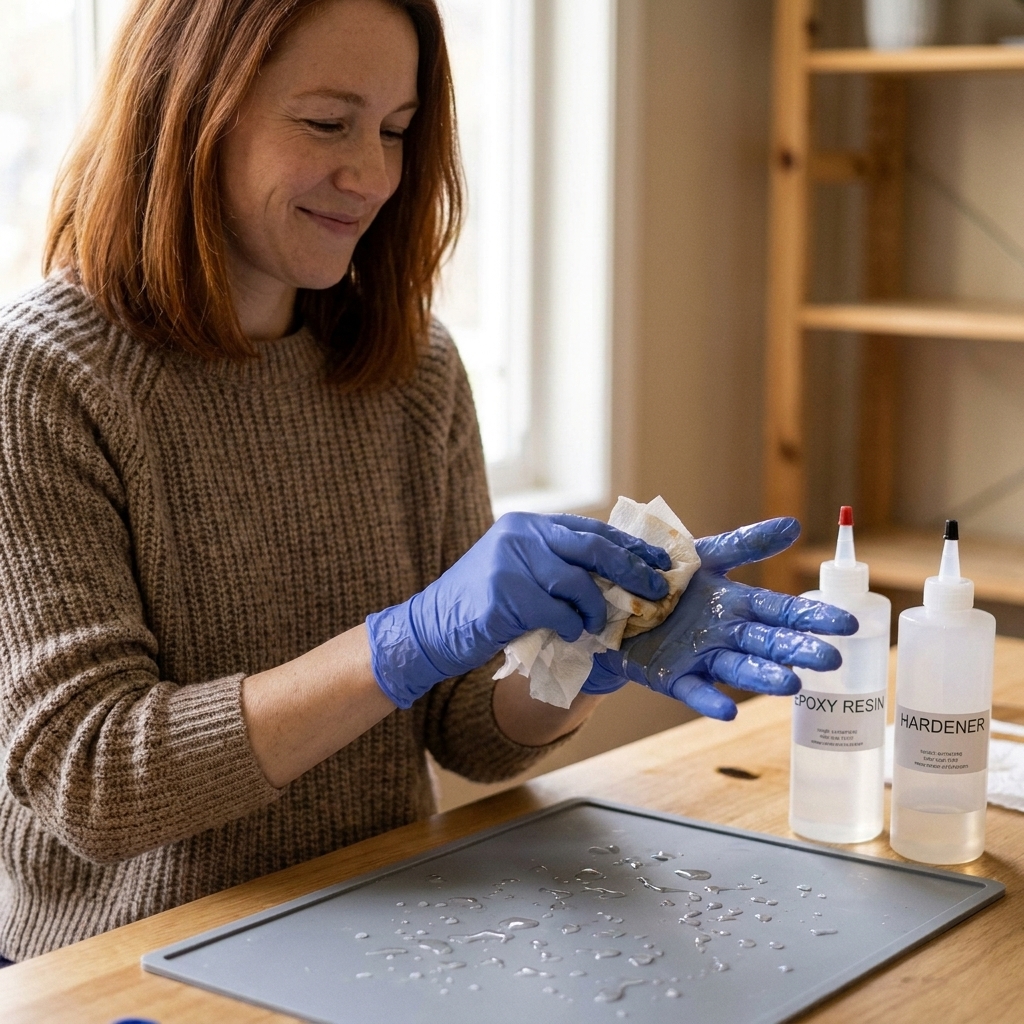
Before you head to the sink, wipe off as much as possible without rubbing it around.
- Use dry paper towels or disposable shop towels.
- Blot and lift. Do not scrub.
- If you are wearing rings or a watch, remove them now so resin does not get trapped underneath.
Step 2: Wash with cool to lukewarm running water
Go straight to a sink and wash with plenty of soap and running water. Cool to lukewarm is ideal. Very hot water can make skin feel more irritated and flushed, and it can make cleanup messier.
- Lather for at least 20 seconds.
- Rinse well.
- Repeat 2 to 3 times if needed.
Step 3: Use an oil-based remover if it is still tacky
If you washed and you still feel that sticky, grabby layer, an oil can help lift uncured resin residue more gently than harsh solvents.
- Try cooking oil (olive, canola), baby oil, or mineral oil.
- Massage a small amount onto the area for 30 to 60 seconds.
- Wipe away with a clean paper towel.
- Wash again with soap and water.
Finish by applying a fragrance-free moisturizer. Resin cleanup is drying even when you do everything right.
If resin got on your sleeve or clothing: take it off carefully so you do not smear resin onto more skin, then wash the exposed skin right away. Launder the item separately when you can.

What to avoid
I know the internet is full of “it worked for me” hacks. Some of them remove resin fast, but they can also irritate skin, worsen exposure, or cause a rash that lasts way longer than the resin would have.
- Do not use acetone on skin (including nail polish remover). It strips oils aggressively and can increase irritation. Save acetone for tools and nonporous surfaces, not your hands, unless a medical professional or poison control tells you otherwise.
- Do not use isopropyl alcohol as a skin wash. Alcohol can dry and irritate, and rubbing can spread resin over a larger area, unless a medical professional or poison control tells you otherwise.
- Do not scrub with abrasives (salt, sugar scrubs, pumice) while resin is uncured. That can push resin into tiny skin cracks.
- Do not “wait for it to cure” on your skin. Even if a thin smear does not feel hot, leaving it in contact longer increases the chance of irritation or sensitization and usually makes it harder to remove cleanly.
- Be cautious with “handy wipes.” Many contain solvents or fragrance. If you use a wipe, make sure it is skin-safe, then still wash with soap and water after.
If you already used a solvent and your skin feels stingy or raw: stop rubbing, wash gently with soap and cool water, moisturize, and keep an eye on it.
If you need help with safe cleanup for your workspace and tools, I cover that in detail here: How to Clean Up Uncured Resin and Dispose of Epoxy Waste Safely.
If resin has cured on your skin
If it is fully hard, the urgency is lower. Now you are mainly dealing with a stuck plastic patch.
Gentle removal options
- Warm soapy soak: Soak the area for 10 to 15 minutes, then gently roll the edge with your fingertips.
- Oil massage: Massage oil into the area to help loosen the edges.
- Time: Sometimes the safest option is letting it wear off over a day or two as your skin naturally sheds.
Avoid picking if it is attached near a cuticle or cracked skin. That is how you end up with a sore spot that takes a week to heal.
When to get medical help
Most small skin contacts are manageable at home, but epoxy can cause allergic reactions in some people. Sensitization can develop over time, even if you were “fine” before.
Call a medical professional or seek urgent care if:
- You develop hives, widespread rash, intense itching, or swelling.
- You have blistering or a burn-like feeling that worsens.
- Resin got into a cut or under a nail and you cannot remove it.
- You feel short of breath, wheezy, or your face or lips swell (seek emergency care).
If resin gets in your eyes
Rinse with clean running water for 15 minutes and get medical care promptly. Remove contact lenses if you wear them and it is easy to do. Do not try to “wipe it out” with solvents.
If you still have the bottles, keep them nearby so you can share the product details and Safety Data Sheet information with a clinician if needed.
Preventing resin on skin (my routine)
Prevention is less dramatic than cleanup, but it is where the stress disappears. Here is what has saved my hands over the years.
Wear the right gloves
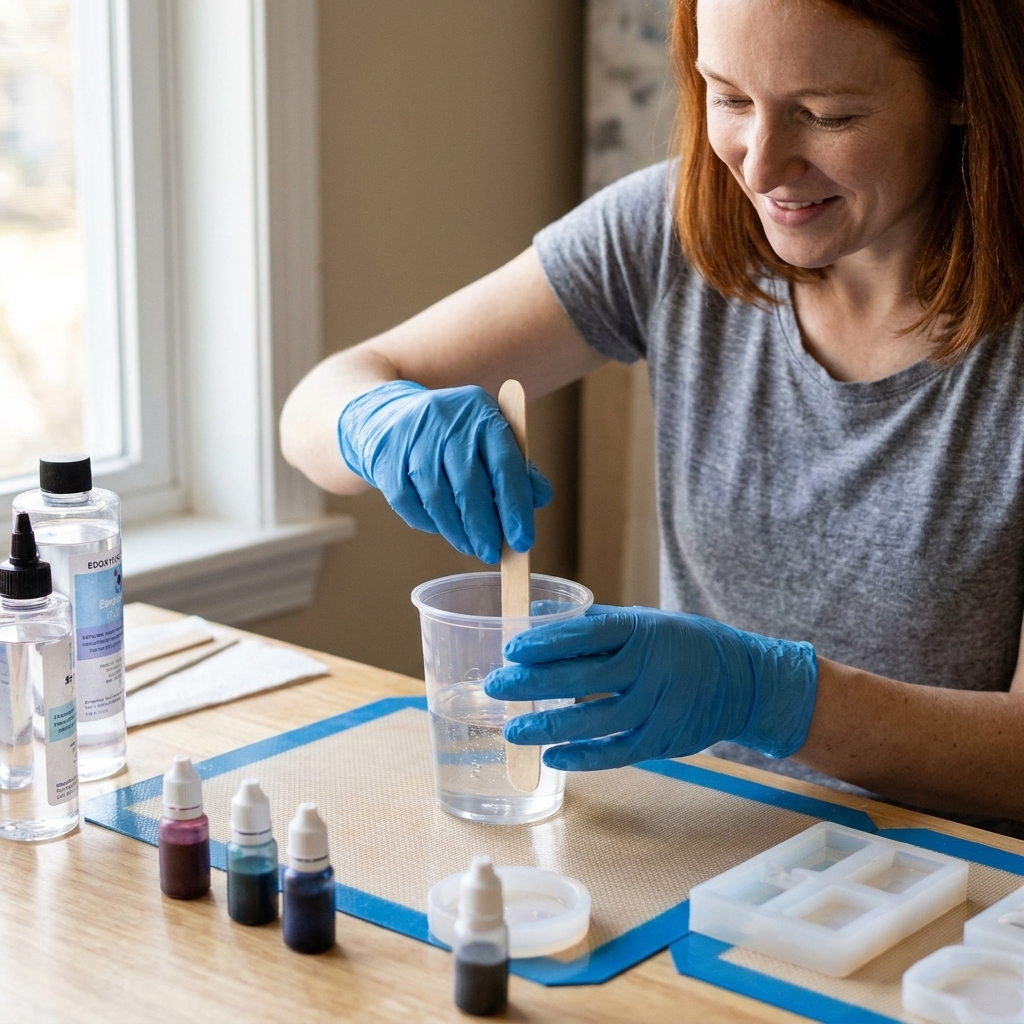
- Use nitrile gloves (not latex). Nitrile holds up better to resin work.
- Change gloves often. If you get resin on a glove, swap it instead of spreading it to everything you touch.
- Consider a slightly longer cuff glove if you tend to drip when mixing.
I go deeper on PPE here: Resin Safety Gear: Respirators, Gloves, and Eye Protection.
Set up a workspace that keeps hands clean
- Keep paper towels within reach.
- Use a silicone mat or protected surface so you are not fighting sticky surprises.
- Have a “clean zone” for your phone and tools you touch with ungloved hands.
If you are setting up at home, my full walkthrough is here: Set Up a Safe, Ventilated Resin Workspace at Home.
Mix carefully to avoid drips
A lot of skin contact happens during measuring and mixing, not during the pour.
- Measure accurately and mix thoroughly so you are not dealing with unpredictable sticky resin.
- Scrape the sides and bottom of your cup while mixing to reduce uncured pockets.
If you want a refresher, I have a step-by-step guide here: How to Measure and Mix 2 Part Epoxy Resin.
Quick FAQ
Is epoxy resin dangerous on skin?
Uncured epoxy can irritate skin and can contribute to allergic sensitization over time. One brief contact does not guarantee a serious reaction, but it is worth treating every exposure seriously.
Should I use vinegar to remove epoxy from skin?
I do not recommend it as a primary method. It can irritate sensitive skin, and rubbing is the bigger issue because it spreads resin. Soap and water plus an oil step is a gentler, more reliable approach.
Why do my hands feel itchy after resin even if I cleaned up?
You might be experiencing irritation from contact, over-scrubbing, or the start of sensitization. Stop resin work for the day, wash gently, moisturize, and monitor. If itching, rash, or swelling persists, talk to a medical professional.
What if my resin is sticky and I keep getting it everywhere?
Sticky resin often points to measuring, mixing, or cure environment issues. This guide can help you troubleshoot: 8 Reasons Your Epoxy Resin Is Sticky or Soft and How to Fix It.
The calm rule I follow
If resin hits skin, I treat it like glitter mixed with honey. I blot first, then wash, then use oil if needed. No harsh solvents. No panic scrubbing. Your skin barrier is part of your safety gear, too, and it deserves a little kindness.
For more beginner friendly safety basics, you can also browse: Getting Started and Safety.