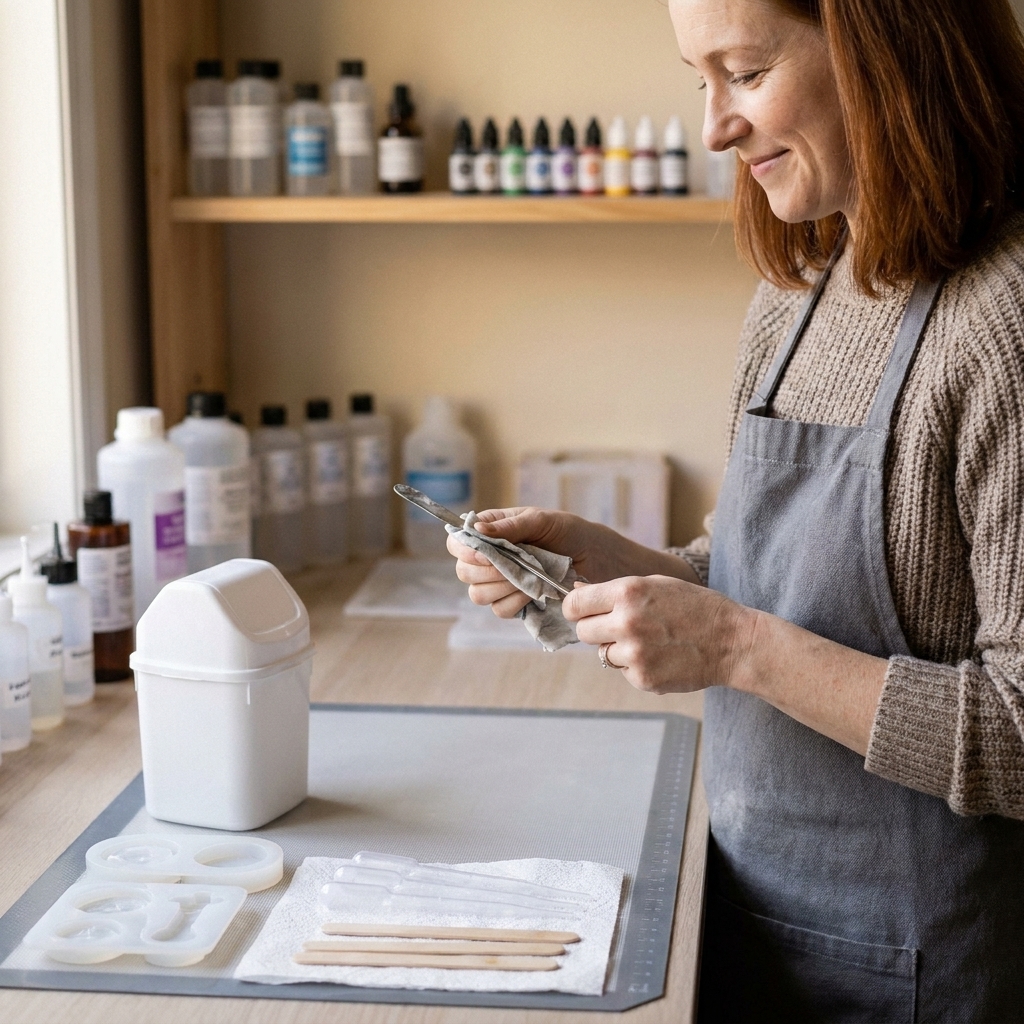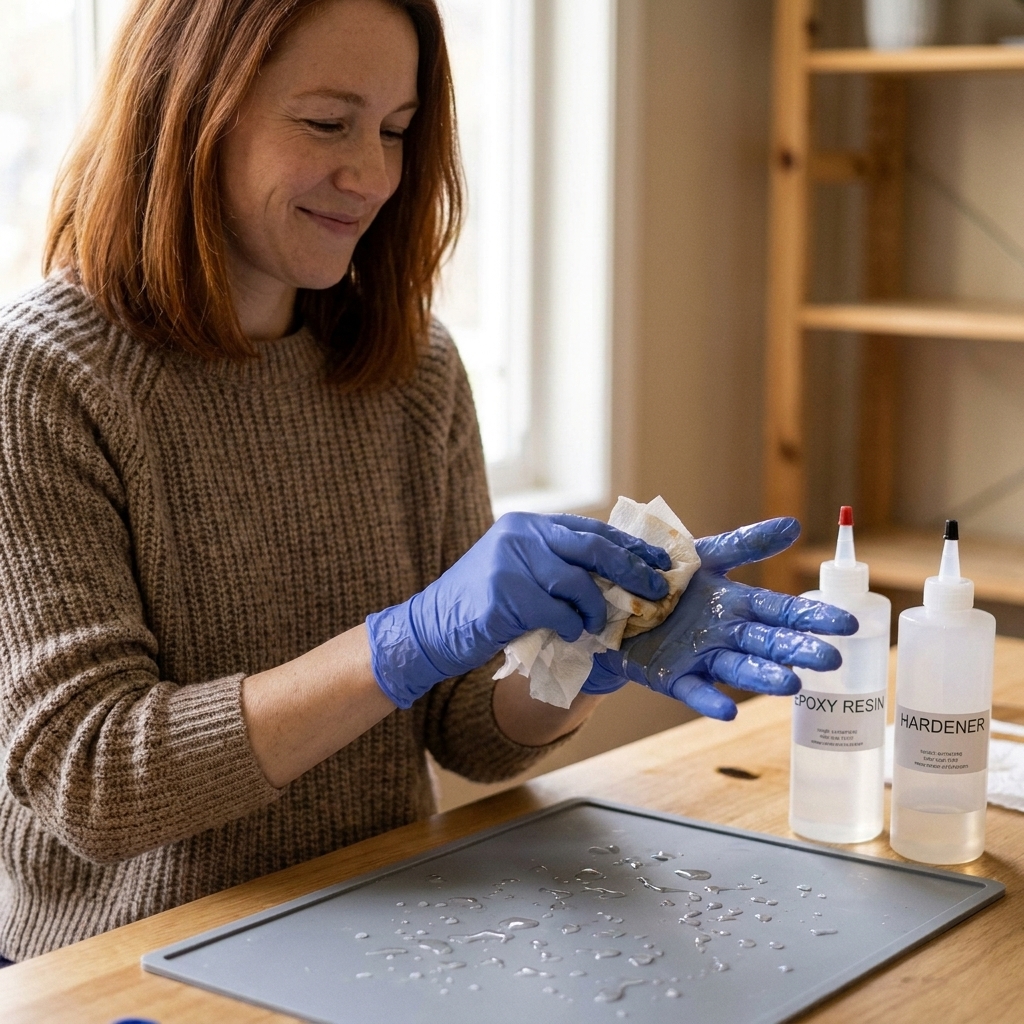
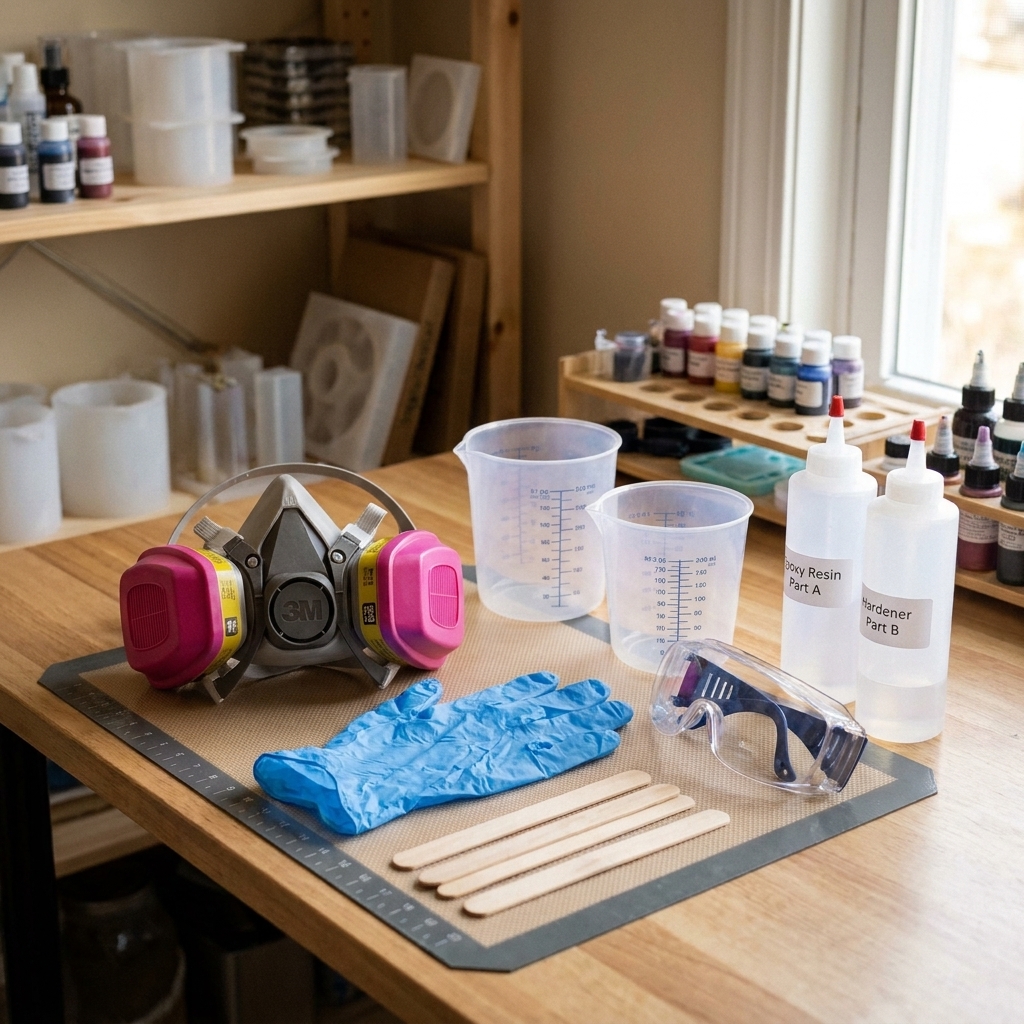
A practical resin PPE guide covering properly fitted respirators (OV and P100 options), nitrile glove picks and thickness, and sealed goggles for splashes an...
How to Clean Up Uncured Resin and Dispose of Epoxy Waste Safely

Ruby Fletcher
Ruby Fletcher is a dedicated resin crafter with years of hands-on experience pouring, molding, and creating custom epoxy art. After turning her dining room into a makeshift studio, she developed a passion for helping beginners navigate the sticky, colorful world of resin with confidence. She loves sharing practical tutorials, troubleshooting tips, and essential safety guides to make epoxy crafting accessible for everyone.
Published
The first time I poured epoxy in my dining room, I thought cleanup would be the easy part. It was not. I ended up with sticky gloves, a tacky stir stick, and a paper towel ball that felt like it could glue itself to the floor forever. The good news is that uncured resin cleanup gets simple once you follow one rule: treat liquid epoxy like household hazardous waste (HHW) until it is fully cured.
This guide walks you through exactly how to clean cups and tools, handle spills, and dispose of epoxy waste in a way that is safer for you, your plumbing, and the environment.
Before you start: safety comes first
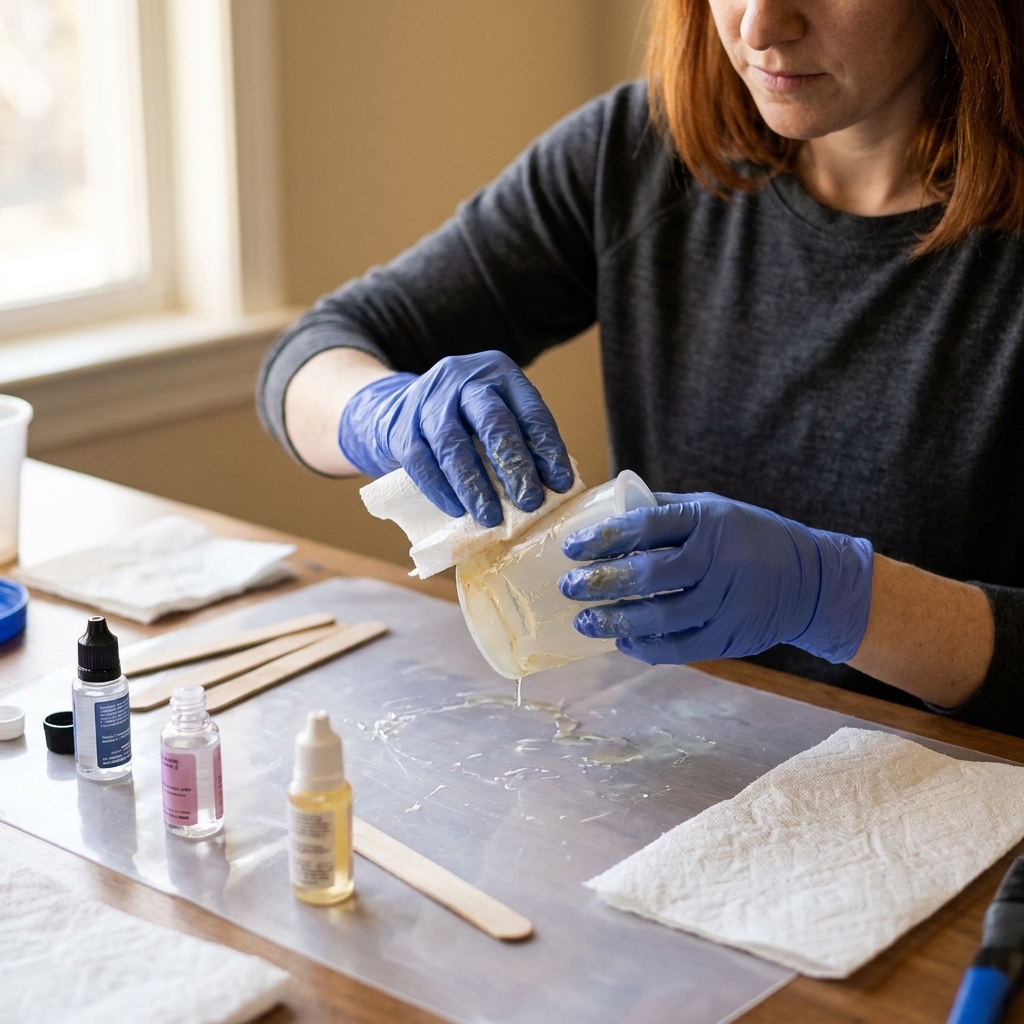
Uncured epoxy resin and hardener can irritate skin, trigger sensitization, and release fumes depending on the product and ventilation. Cleanup is when many beginners get exposed because we rush and touch everything.
- Put on fresh nitrile gloves (not latex). If resin got on your gloves during the pour, swap to a clean pair before you start wiping tools.
- Wear eye protection if you are scraping or using alcohol, acetone, or disposable wipes.
- Ventilate just like you would during pouring. If you need help setting that up, see Set Up a Safe, Ventilated Resin Workspace at Home.
- Use the right respirator when needed. I keep my safety gear in one bin so I do not talk myself into skipping it. This guide helps: Resin Safety Gear: Respirators, Gloves, and Eye Protection.
Big rule: never pour resin, hardener, or resin-contaminated solvents down the sink, bathtub, or a floor drain. Even tiny amounts can cure in pipes, clog plumbing, and introduce uncured chemicals into wastewater systems.
If you have pets or small kids, treat uncured resin like wet paint that never dries. One curious paw print can track it across your whole house.
Your resin cleanup kit (simple, beginner-friendly)
You do not need fancy products. You need the right disposable items and a plan for curing waste.
- Disposable nitrile gloves
- Paper towels and/or disposable shop towels
- Baby wipes or hand wipes (unscented is my preference)
- Isopropyl alcohol (IPA) 70% to 99% for wiping tools and surfaces (90% to 99% is usually more effective)
- A silicone mat or freezer paper to protect the table
- Plastic scraper or old gift card for lifting drips
- A small lidded container or metal can for resin-contaminated wipes
- Trash bag dedicated to resin cleanup waste
About acetone: some makers use acetone, but it is very flammable and can damage finishes. I reserve it for rare cases and only with strong ventilation. IPA is usually plenty for smears and fresh drips.
How to clean mixing cups and tools
Step 1: Scrape out as much resin as possible
Before you wipe anything, use your stir stick to scrape the sides and bottom of the cup. If you can pour leftover resin into a small test mold (even a bottle cap or silicone cavity), do it. Less resin in the cup means less contaminated waste.
Timing matters: cleanup is easiest while the resin is still fully liquid (during pot life). Once it starts to gel, it turns into stringy, stubborn glue and you will work harder for worse results.
Step 2: Decide whether to save the cup or toss it
Here is my honest rule of thumb:
- Plastic measuring cups: I usually toss unless they are silicone or specifically meant to be reused. Cleanup takes more solvent than it is worth.
- Silicone mixing cups: save. Once resin cures, you can peel it out like a flexible shell.
- Stir sticks: I usually toss, unless it is a silicone stick.
Step 3: For reusable silicone cups and tools, let the resin cure
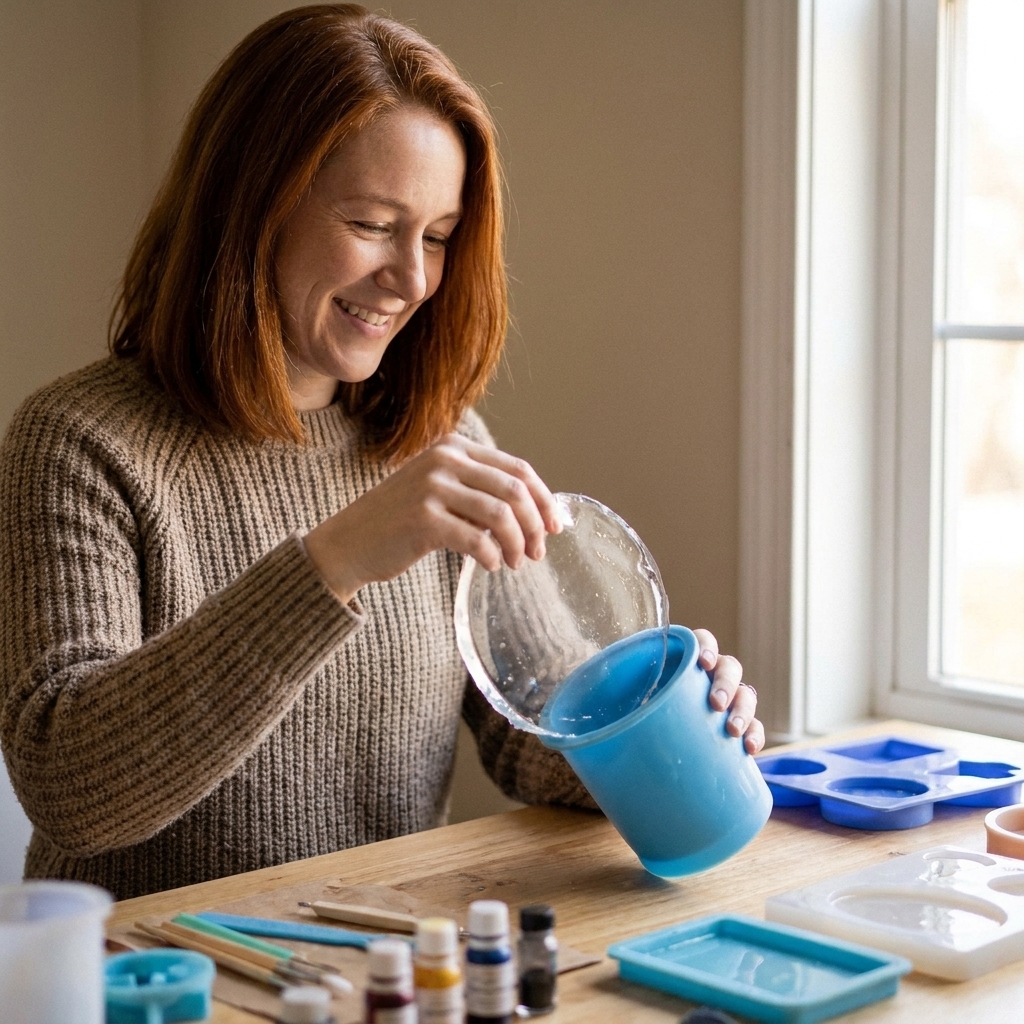
The safest cleanup is often the laziest: let residue cure fully, then peel it out. Set the cup somewhere level, out of reach of pets and kids, and let it harden.
Curing time depends on your resin and your room conditions. If your pieces are staying tacky, your cleanup waste will too, so temperature and humidity matter. This guide can help you dial that in: Ideal Temperature and Humidity for Epoxy Resin Curing.
Step 4: For tools you need clean right now, wipe, then alcohol
- Dry wipe first: use paper towels to remove wet resin. Do not start with alcohol or you will spread a thin sticky film.
- Then use IPA: dampen a towel with isopropyl alcohol and wipe again.
- Final wipe: one more clean dry towel to lift any remaining haze.
Important: towels and wipes used here are now contaminated waste. Collect them in your dedicated container or bag for curing and disposal (more on that below).
How to clean up uncured resin spills
Spills feel dramatic, but most can be handled calmly if you move in the right order.
On a silicone mat, plastic, or waxed paper
- Contain it with a ring of paper towels so it does not travel.
- Scoop and scrape the puddle into a disposable cup or onto a towel.
- Wipe dry until the surface feels mostly clean.
- Wipe with IPA to remove the last smear.
On a finished tabletop, laminate, or sealed wood
Act fast. Resin can bond as it starts to set.
- Dry wipe immediately without rubbing it wider.
- Use a plastic scraper to lift thicker areas.
- Spot-test IPA in a hidden area, then wipe lightly.
If the surface is delicate (antique wood, certain varnishes), skip solvents and focus on lifting resin mechanically while it is still wet, then let any faint residue cure and gently pop it off later.
On skin
Do not use solvents like acetone on your skin. The goal is to remove resin without driving it deeper.
- Wipe off with a dry paper towel.
- Wash with soap and cool or lukewarm water. Hot water can increase skin irritation and may increase absorption.
- Repeat and moisturize after washing.
If you are getting resin on your skin often, it is a setup problem. I cover this in our core safety section: Getting Started and Safety.
On fabric
For clothing, the reality is: uncured epoxy is extremely hard to fully remove. If it is a small smear, blot with paper towels, then dab sparingly with IPA (test a hidden area first, since alcohol can lift dyes and damage some synthetics) and wash separately. For larger spills, I usually retire the item to resin clothes and let the epoxy cure, then peel what you can.
If it cured on something
If you missed the window and the resin has gelled or cured on a tool or surface, switch strategies. Solvents are less helpful once epoxy is solid.
- Start mechanical: gently lift with a plastic scraper, old gift card, or a plastic razor blade style scraper.
- Gentle warmth can help: slightly warming the area can soften epoxy enough to pry it up. Keep heat low and controlled, and protect surrounding finishes.
- Last resort: careful sanding or polishing can remove cured epoxy from some surfaces, but it can also permanently change sheen. Test in a hidden spot if you can.
When in doubt, I would rather leave a tiny cured spot than wreck a tabletop trying to “win” the cleanup.
Safe disposal: what to do with epoxy waste
This is the part most craft blogs skip, but it matters. Epoxy components in liquid form should be handled like household hazardous waste, and local rules can vary by product and jurisdiction. The simplest safe strategy is:
Turn liquid waste into solid waste by letting it fully cure, then dispose according to local rules.
What can usually go in the trash (after curing solid)
- Fully cured resin drips and scraps
- Cured residue peeled from silicone cups
- Cured mixing sticks
- Paper towels and wipes that have cured stiff
Once cured, epoxy is typically a stable solid for small home-crafting amounts. Still, always follow your local waste guidelines and your product SDS since rules vary by city and county.
What should not go in the trash while still wet
- Leftover mixed resin that is still liquid
- Part A resin or Part B hardener containers with liquid remaining
- Alcohol or acetone used to clean tools (now contaminated)
- Wet resin-soaked rags or towels
How I handle leftovers safely at home
- Let leftover mixed resin cure in the cup on a protected surface. If it is a deep cup that might get hot, spread leftovers in a shallow disposable tray so it cures with less heat buildup.
- Keep cleanup waste in one dedicated container. I use a small lidded metal can or thick plastic tub lined with a bag.
- Do not ball up resin or solvent-wet towels. Spread them out flat on a protected surface in a ventilated area until they are no longer wet, then move them into your waste container to finish curing. A wad of towels can trap heat and fumes.
- Leave the lid cracked at first in a ventilated area, out of reach of pets and kids. Once everything is cured and no longer tacky, I close it up and toss.
Note on heat: epoxy can exotherm as it cures, meaning it can get surprisingly hot. Avoid leaving a large mass of mixed resin in a deep cup, especially in warm rooms.
What about resin-contaminated solvent (IPA or acetone)?
If you used solvent to clean tools, the safest option is usually a household hazardous waste drop-off. Store the used solvent in a sealed, labeled container and take it to your local hazardous waste facility.
Some makers use an evaporation approach for tiny amounts, but it can be restricted or discouraged by local rules and it raises VOC and fire risks. If you choose that route, keep it strictly to very small quantities, in a very well-ventilated, spark-free area away from flames, and never treat it as a default disposal method.
If you are not sure what your area recommends, your city or county household hazardous waste program is the best authority. In the US, the EPA page is a helpful starting point for finding local guidance: https://www.epa.gov/hwgenerators/household-hazardous-waste-hhw.
Disposing of empty resin bottles and jugs
Always follow the label and Safety Data Sheet (SDS) for your specific brand. In general:
- If the container is truly empty: many areas allow it in trash, and some allow recycling if it is clean and dry. Resin packaging is often contaminated, so do not assume it belongs in recycling.
- If there is liquid left: treat it as household hazardous waste.
- Do not rinse epoxy containers in the sink to clean them out. That rinse water becomes hazardous waste.
Quick cleanup checklist
- Fresh gloves on before cleanup
- Dry wipe first, solvent second
- Collect wipes and towels in one dedicated container
- Do not ball up resin or solvent-wet towels while they cure
- Never pour resin or contaminated solvent down drains
- Let leftovers cure solid whenever possible
- Use hazardous waste drop-off for liquids you cannot cure safely
FAQ
Can I wash resin tools in the sink if I use dish soap?
No. Soap does not make epoxy safe for plumbing or wastewater. Wipe tools clean first, then clean further with controlled solvent use if needed, and let waste cure or dispose as hazardous waste according to local rules.
What if my resin is still tacky the next day?
Keep it isolated and ventilated and give it time. Tacky waste is still uncured waste. If your resin stays tacky repeatedly, it is often a mixing ratio issue or a curing environment issue. Temperature and humidity can make a huge difference, especially in cooler, damper regions like mine in the Pacific Northwest. See Ideal Temperature and Humidity for Epoxy Resin Curing.
Is UV resin cleanup different from 2-part epoxy?
A bit. UV resin stays liquid until exposed to strong UV light, so your best trick is to wipe up spills, then cure residue with a UV lamp or sunlight before disposal. If you are still choosing between them, I break it down here: UV Resin vs 2-Part Epoxy: What Beginners Should Choose.
What is the safest no-solvent cleanup method?
Use silicone tools and silicone mixing cups, wipe excess while wet, then let residue cure and peel it off. It is slower, but it keeps solvents out of the process and reduces waste.